Quantitative Trading for Individuals: What Actually Scales
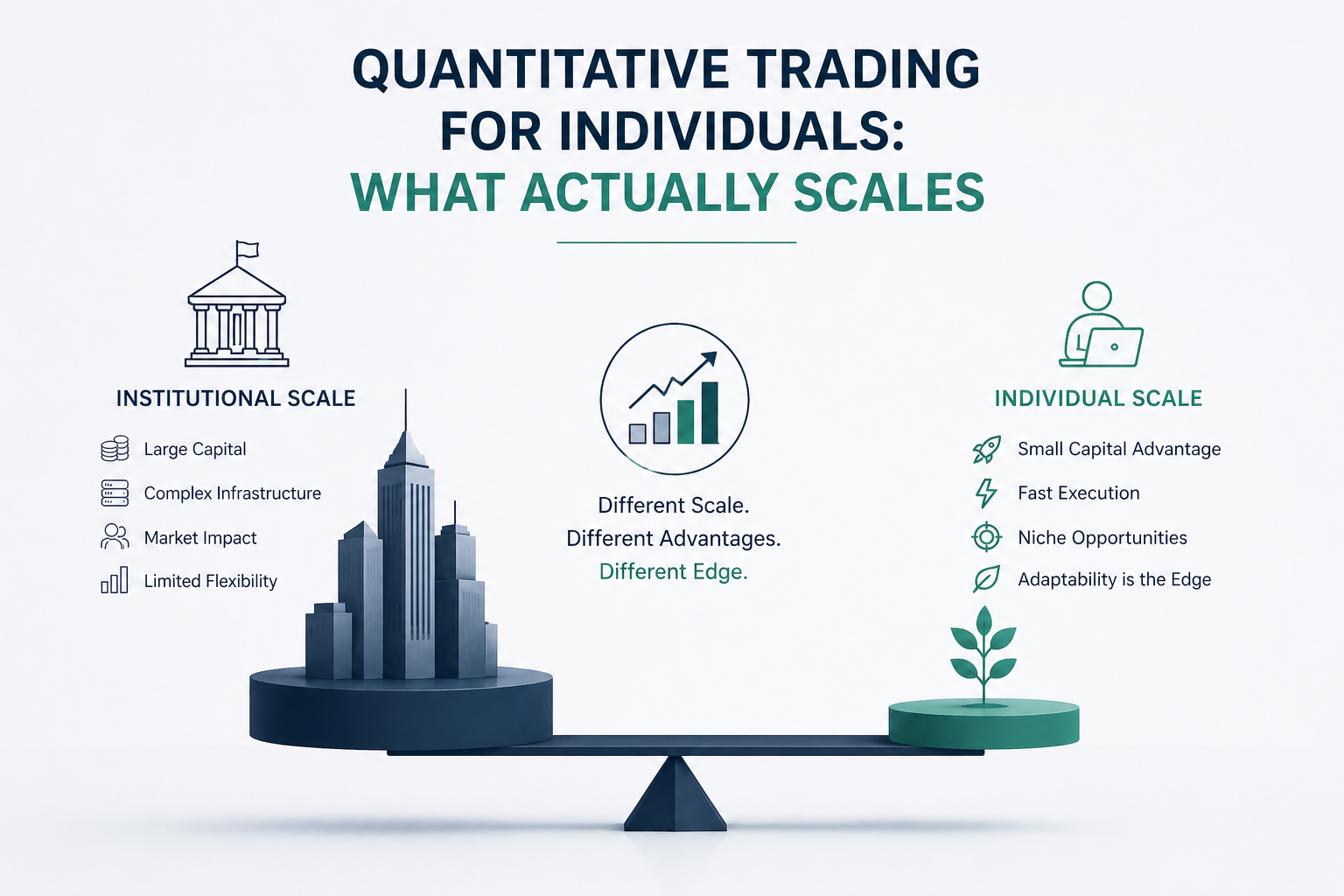
Most individual traders ask the wrong question. “How do I trade like a hedge fund?” The better question is: “What […]
Quantitative Trading for Individuals: What Actually Scales Read Post »
Most individual traders ask the wrong question. “How do I trade like a hedge fund?” The better question is: “What […]
Quantitative Trading for Individuals: What Actually Scales Read Post »
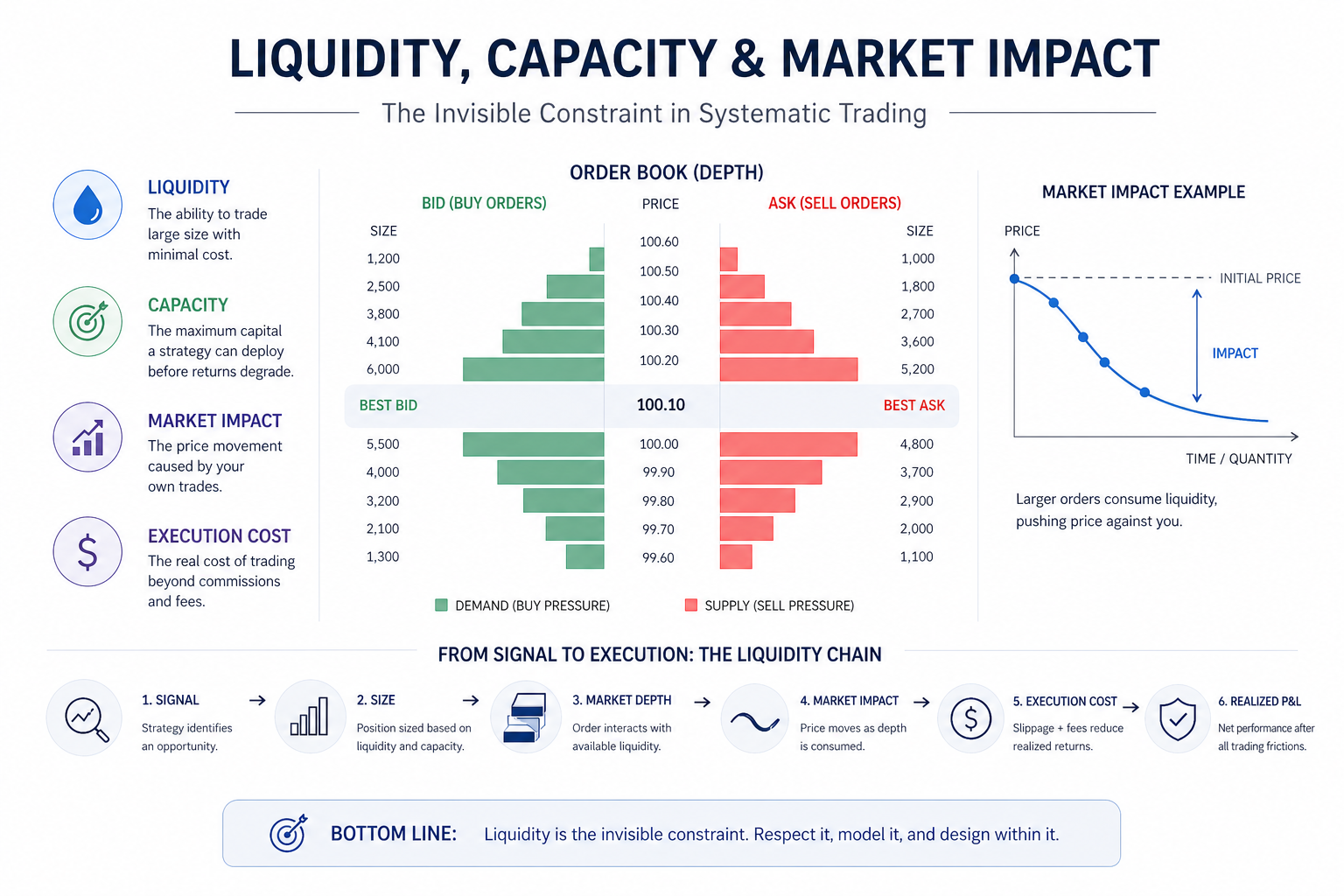
Most quant strategies fail not because they are wrong. They fail because they are too large. In systematic trading, the
Liquidity, Capacity & Market Impact: The Invisible Constraint in Systematic Trading Read Post »
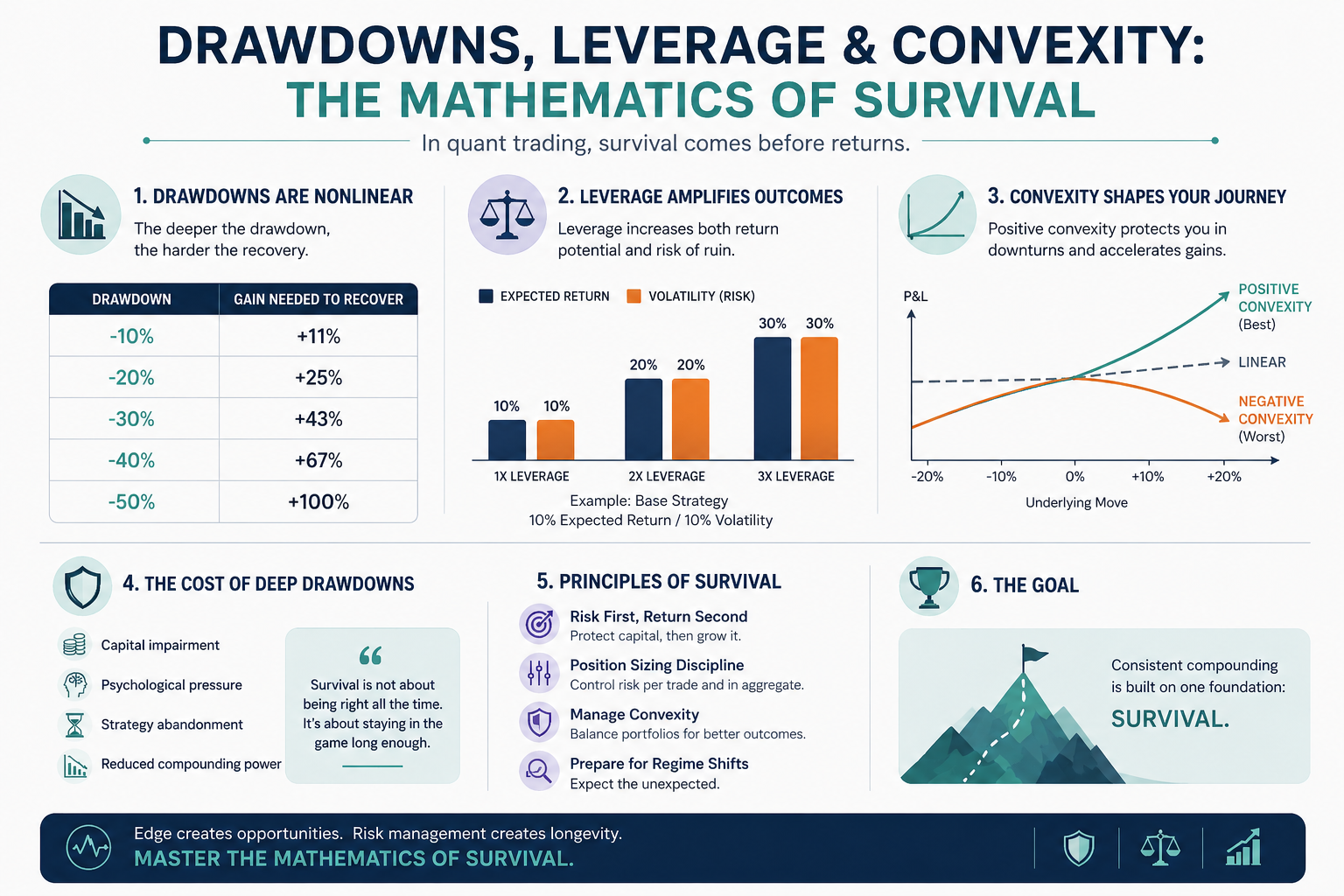
Returns attract attention. Drawdowns determine survival. In quantitative trading, performance is not defined by peak returns — but by the
Drawdowns, Leverage & Convexity: The Mathematics of Survival Read Post »
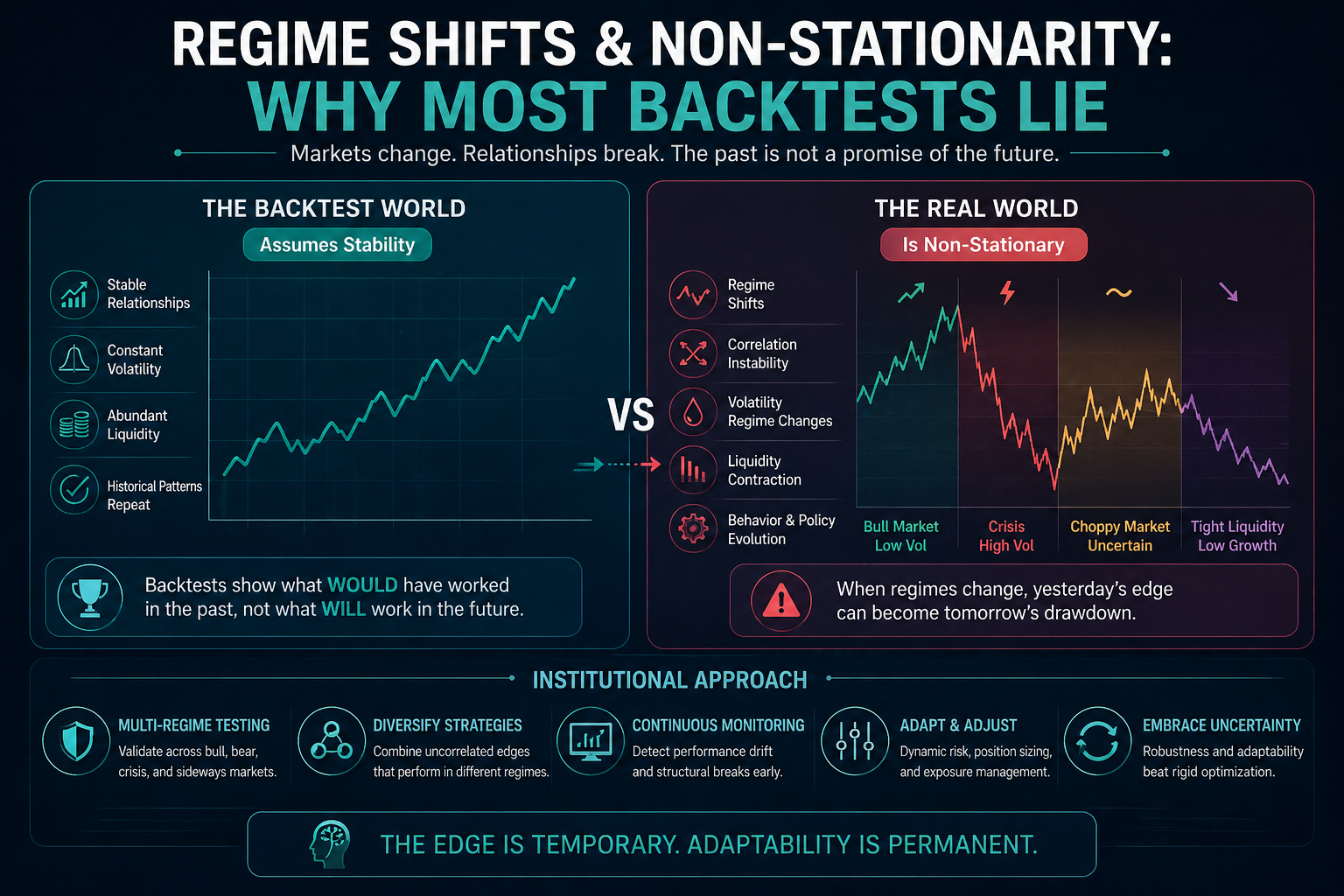
Backtests create confidence. Markets remove it. One of the most misunderstood realities in quantitative trading is that financial markets are
Regime Shifts & Non-Stationarity: Why Most Backtests Lie Read Post »
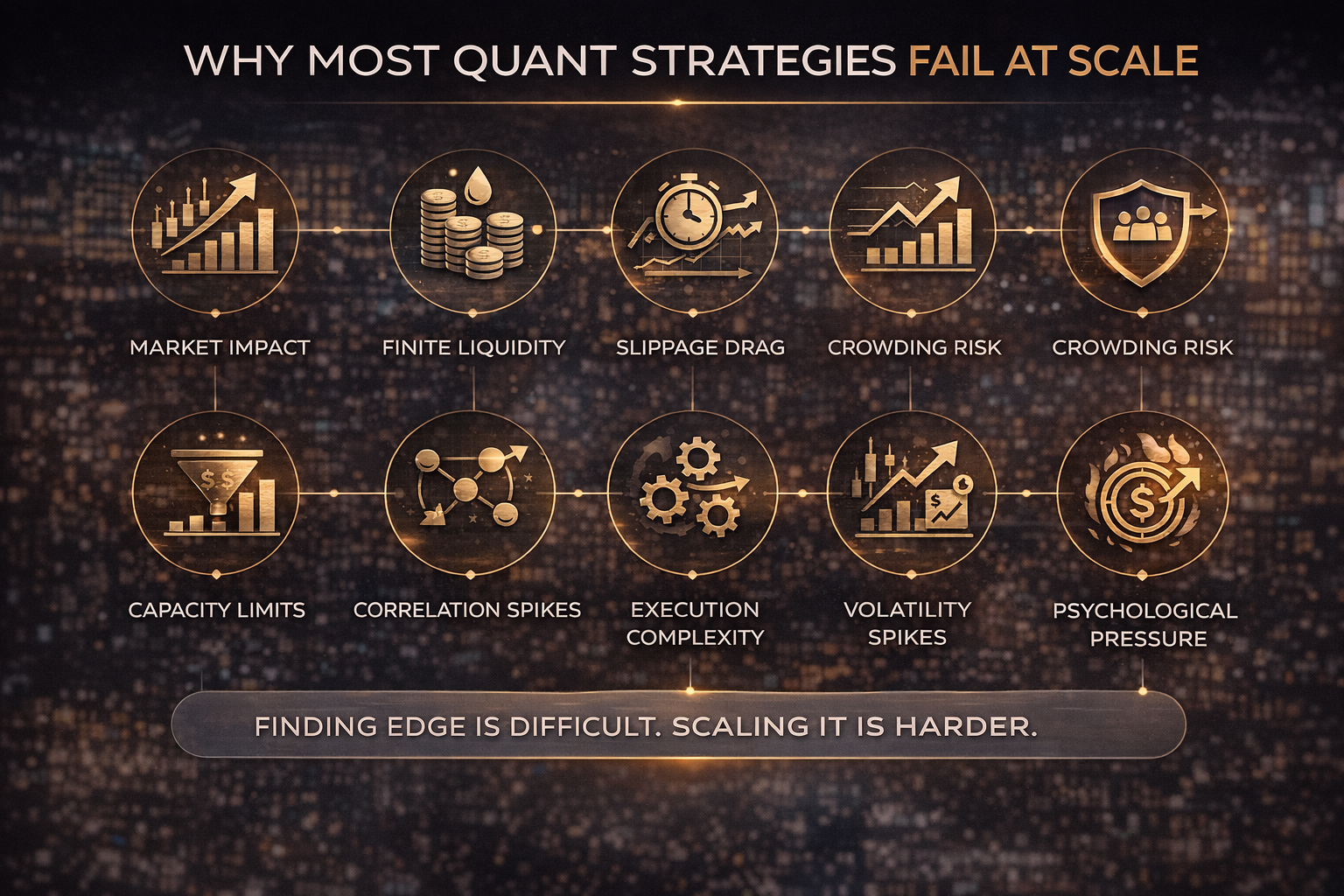
A quant strategy working at small capital is not proof of edge. It is proof of possibility. The real test
Why Most Quant Strategies Fail at Scale Read Post »
Understanding Markets Through Structure, Not Noise In most trading approaches, the focus is on prediction—what will happen next. But markets
Idea Behind Time-Tested StructurePulse Strategy Read Post »
Quantitative strategies do not fail suddenly. They evolve — and eventually decay. Understanding this lifecycle is essential for anyone attempting
The Lifecycle of a Quant Strategy: From Idea to Decay Read Post »
Backtests rarely fail. Live trading often does. The transition from research environment to production capital deployment is where many quantitative
From Research to Live Trading: The Hidden Failure Points in Quant Models Read Post »
Overfitting is the silent killer of quantitative trading. Most failed strategies do not collapse because the idea was flawed.They collapse
How to Build Non-Overfitted Quantitative Models Read Post »