From Traditional Investing Frustrations to Systematic Research & Automation
Like many professionals, we spent years following conventional investment frameworks — long-term portfolios, mutual funds, diversified asset allocation, and traditional wealth-building models. Over time, however, it became increasingly clear that many of these approaches struggled to consistently deliver the levels of capital efficiency, adaptability, and risk control required in modern markets.
With backgrounds spanning technology, systems engineering, and quantitative research, investing gradually became less about prediction and more about structured research, data, and process design.
That transition became the foundation of Linitics.
The focus shifted toward building large historical market datasets across highly liquid financial instruments and developing systematic frameworks capable of adapting across changing market regimes — including periods of elevated volatility, recessionary pressure, and structural uncertainty.
Rather than relying on static indicators or discretionary decision-making, the emphasis centered around:
- quantitative research,
- portfolio-level strategy construction,
- risk management,
- and long-term operational resilience.
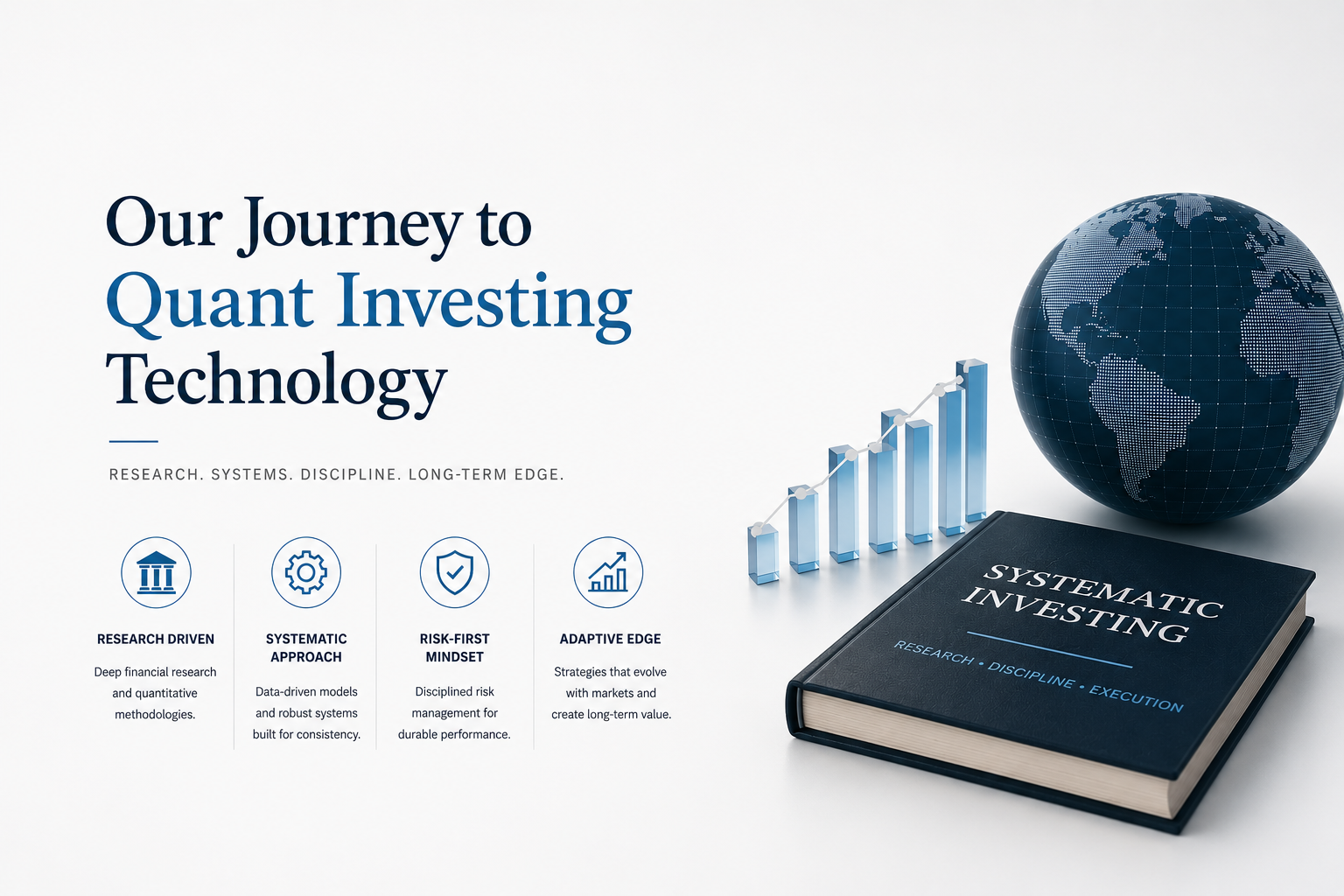
Over time, this evolved into a broader philosophy built around:
- systematic trading and investing,
- automation,
- adaptive strategy behavior,
- and institutional-style research discipline.
The objective was never to engineer high-risk speculative systems, but to build resilient investment frameworks capable of surviving changing market environments while maintaining disciplined risk structures.
Today, the intersection of:
- quantitative finance,
- technology infrastructure,
- systematic execution,
- and institutional operating philosophy
continues to redefine how modern investment systems are designed and operated.
Because in increasingly complex markets, sustainable investing belongs to those who combine capital discipline with technology-driven decision systems.