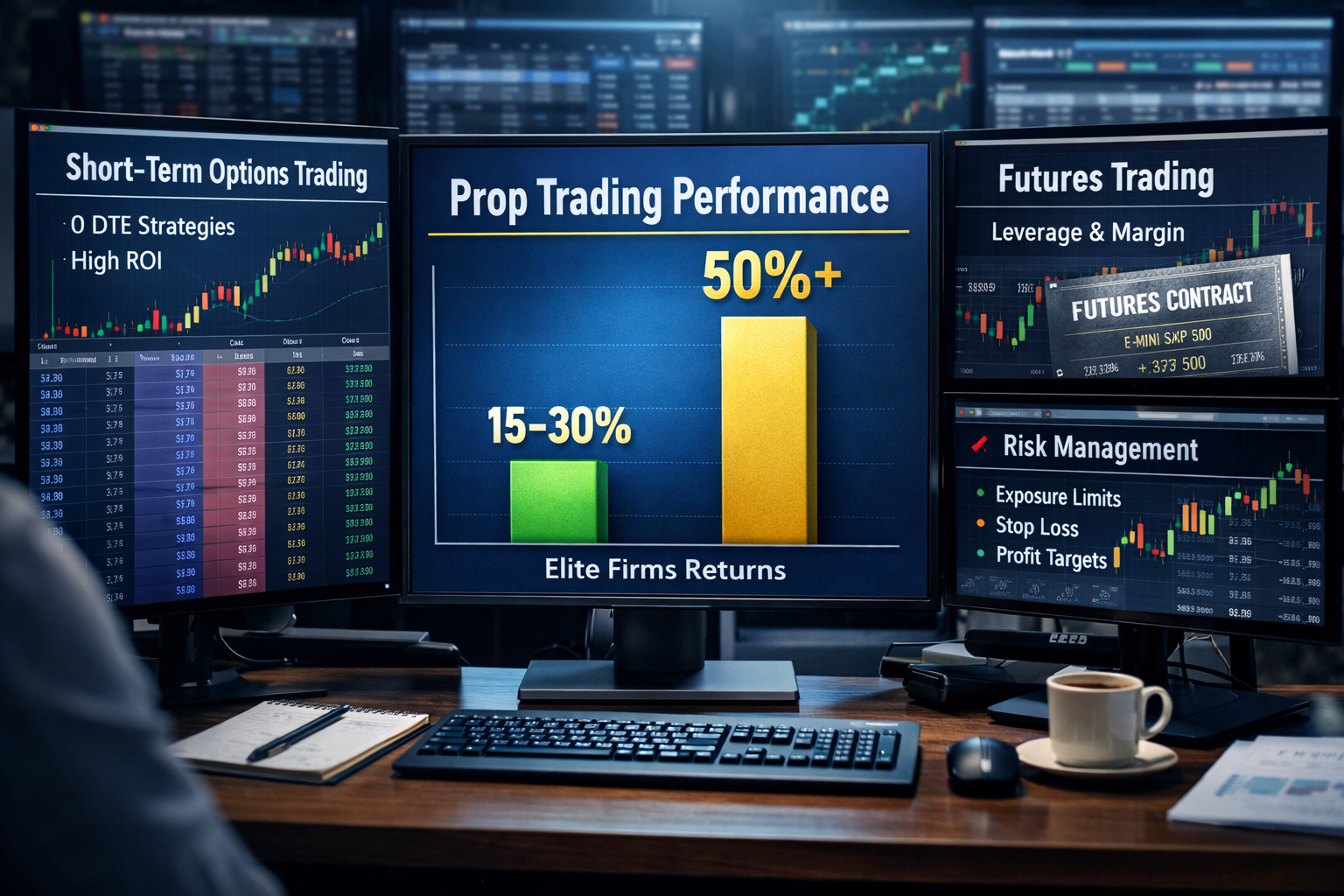
Proprietary trading firms are often misunderstood or grouped together with retail trading platforms and third-party funded models. A true proprietary trading firm, however, operates very differently. It deploys only its own capital, relies on in-house technology and research, and generates returns through systematic, repeatable trading strategies rather than discretionary decision-making.
This article outlines how a technology-driven proprietary trading firm operates, how returns are generated, and why this model has become an increasingly important part of modern financial markets.
How Technology-Led Prop Trading Generates Returns
At the core of a quantitative proprietary trading firm is a structured research and trading process. Strategies are developed using historical data, statistical analysis, and continuous testing to identify market patterns that can be traded consistently over time.
Rather than relying on individual traders, decisions are made through predefined models that govern:
- When to enter and exit positions
- How much capital to allocate
- How risk is managed under different market conditions
Common strategy styles include:
- Relative-value and market-neutral trading
- Trend and momentum-based strategies
- Volatility and options-driven approaches
- Cross-market and cross-asset opportunities
This systematic approach allows the firm to operate with discipline, consistency, and scalability.
Performance Characteristics and Market Exposure
Technology-driven proprietary trading focuses on absolute returns, not outperforming a specific benchmark. Exposure is actively managed and adjusted as market conditions change.
As a result, performance characteristics typically include:
- Low dependence on long-term market direction
- Diversification across instruments, strategies, and timeframes
- Risk controls embedded directly into the trading process
Because strategies are designed to function across different market environments, returns are not solely dependent on rising equity markets.
Fully Internal Capital Deployment
A defining feature of this model is complete independence from external capital.
The firm:
- Trades only its own balance sheet
- Does not accept outside investors
- Does not rely on retail traders or evaluation-based funding models
This structure removes many of the constraints faced by asset managers, such as redemption risk, fundraising cycles, or short-term performance pressure. Capital allocation decisions are driven purely by strategy performance, risk limits, and scalability considerations.
The Role of Technology and Infrastructure
Technology underpins every stage of the trading process—from research and simulation to execution and risk management.
Key capabilities typically include:
- Robust data infrastructure for research and live trading
- Automated execution systems to ensure consistency and efficiency
- Real-time risk monitoring and capital controls
- Ongoing performance analysis and model refinement
By automating decision-making and risk controls, the firm reduces reliance on human discretion and minimizes operational risk.
How This Differs From Hedge Funds
While hedge funds and proprietary trading firms may use similar tools, their objectives and structures differ.
| Aspect | Technology-Driven Prop Trading | Hedge Funds |
|---|---|---|
| Capital | Internal only | External investors |
| Fees | None | Management and performance fees |
| Liquidity pressure | None | Investor redemptions |
| Focus | Trading performance | Performance + asset growth |
| Flexibility | High | Often constrained |
The proprietary model allows for a singular focus on risk-adjusted trading performance, without the commercial and structural overhead of asset management.
Why This Model Is Built for Scalability
Technology-led proprietary trading scales through research quality and infrastructure rather than capital raising.
Improvements in models, execution, or risk management benefit the entire capital base. Strategies can be deployed across multiple markets with limited incremental cost, creating a compounding effect over time.
This makes the model well suited for long-term development and continuous improvement.
Key Takeaways
- A true proprietary trading firm trades only its own capital
- Technology replaces discretionary decision-making
- Systematic strategies enable consistency and scalability
- Internal capital removes external constraints
- Long-term performance depends on research discipline and execution quality
Final Thoughts
Technology-driven proprietary trading represents a disciplined and modern approach to market participation. By combining systematic research, automation, and internal capital, these firms operate with clarity of purpose and strong alignment between strategy, risk, and execution.
As financial markets continue to evolve, proprietary trading firms that prioritize technology, governance, and disciplined risk management are well positioned to generate sustainable, long-term returns.
Disclaimer: This content is for informational purposes only and does not constitute financial or investment advice. Proprietary trading involves risk, and outcomes depend on market conditions and execution.